teaching
Open Horizon Robotics
open-source perception curriculum github
I am helping author an open-source computer vision course covering classical 2D vision, deep learning for vision, 3D computer vision, vision geometry, image-based localization and mapping, vision synthesis, and perception physics.
What I like about this kind of work is that it forces you to explain things cleanly. If a topic only makes sense when hidden behind notation, it usually means the explanation still needs work.
Carnegie Mellon University
1. Machine Learning in Experimental Biomedical Engineering Research syllabus
Graduate · Spring 2026 · Dr. Newell Washburn
Department of Biomedical Engineering, College of Engineering
Previously titled Clinical Translations of AI.
This course introduces students to machine learning in experimental BME settings, with an emphasis on the kinds of data that actually show up in the lab: tabular measurements, images, spectra, and time-series signals. Topics include linear models, Gaussian processes, tree-based methods, TabPFN, feature selection, transfer learning, and small-sample modeling.
What makes this course interesting is that it stays grounded in experimental constraints instead of pretending every biomedical problem comes with a huge clean dataset.
2. Computer Vision for Engineers course syllabus
Graduate · Fall 2025 · Dr. Kenji Shimada
Department of Mechanical Engineering, College of Engineering
This course covers the fundamentals of computer vision and their engineering applications, including image processing, motion analysis, 3D reconstruction, point cloud processing, feature tracking, and object detection.
The nice part of this course is that it moves back and forth between theory and implementation. Students do not just learn the concepts in lecture, but also build computational methods through weekly assignments and project work.
3. Fundamentals of Computational Biomedical Engineering syllabus
Graduate · Fall 2025 · Dr. Jason Szafron
Department of Biomedical Engineering, College of Engineering
This course is meant as a bridge for students entering biomedical computing without a strong programming background. It covers core computational tools for biomedical engineering using MATLAB, Simulink, and eventually Python, with topics ranging from linear algebra and PCA to ODEs, nonlinear systems, and machine learning.
I like courses like this because they do something very practical: they help students stop seeing computation as a separate skill and start using it as part of normal engineering work.
4. Applied Deep Learning syllabus
Graduate · Spring 2025 · Dr. Clarence Worrell
Department of Software and Societal Systems, School of Computer Science
This course introduces deep learning with a strong software-engineering angle. It covers neural architectures, deployment concerns, and modern applications of deep learning, especially in and for software systems.
The project-based structure is a big part of why the course works. Students see not just how models are built, but also where they break, overfit, or become awkward to deploy.
Manipal Institute of Technology
BioInnovate technical workshop series
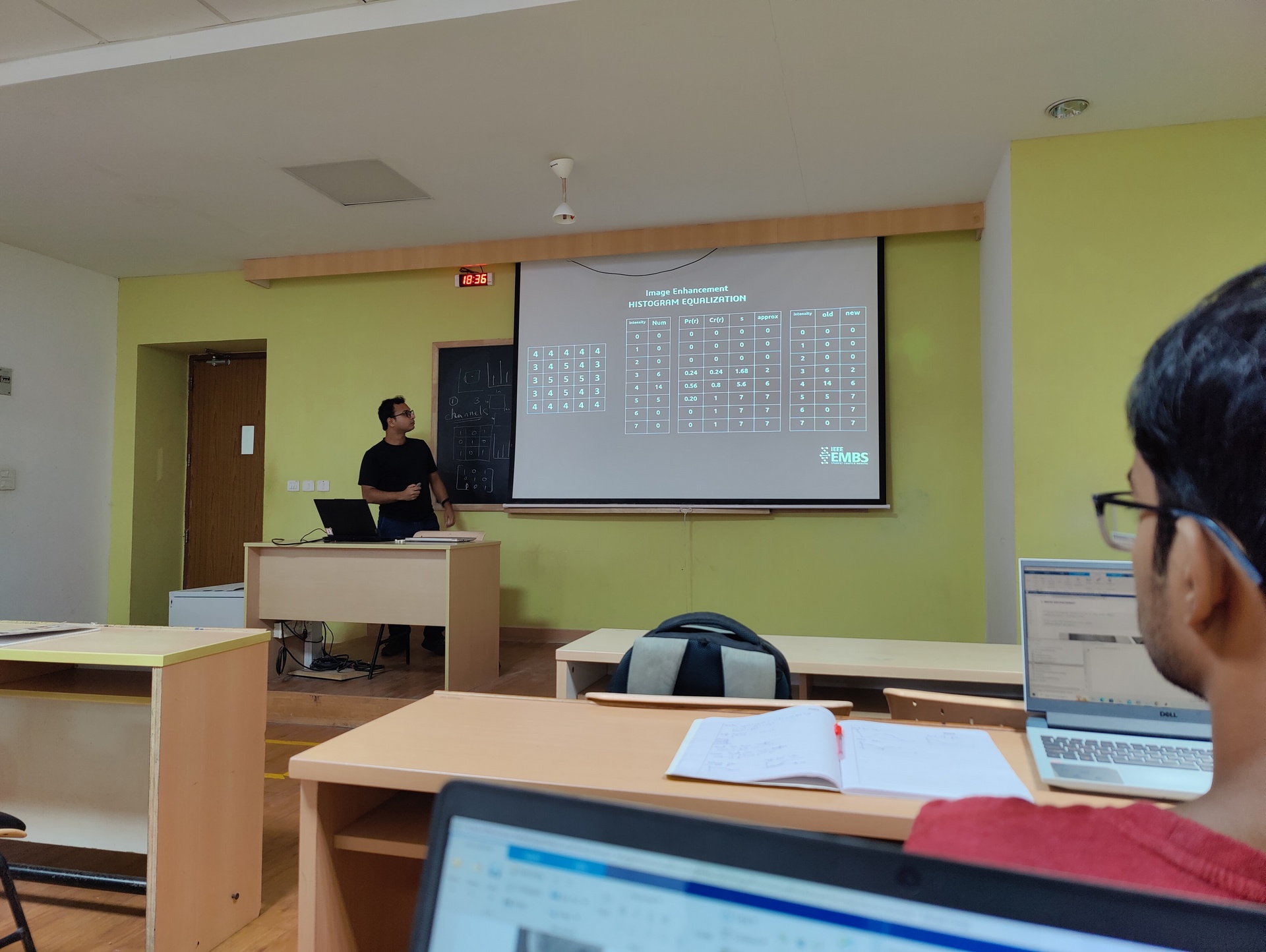
Conducted through IEEE Engineering in Medicine and Biology Society, Student Chapter Manipal
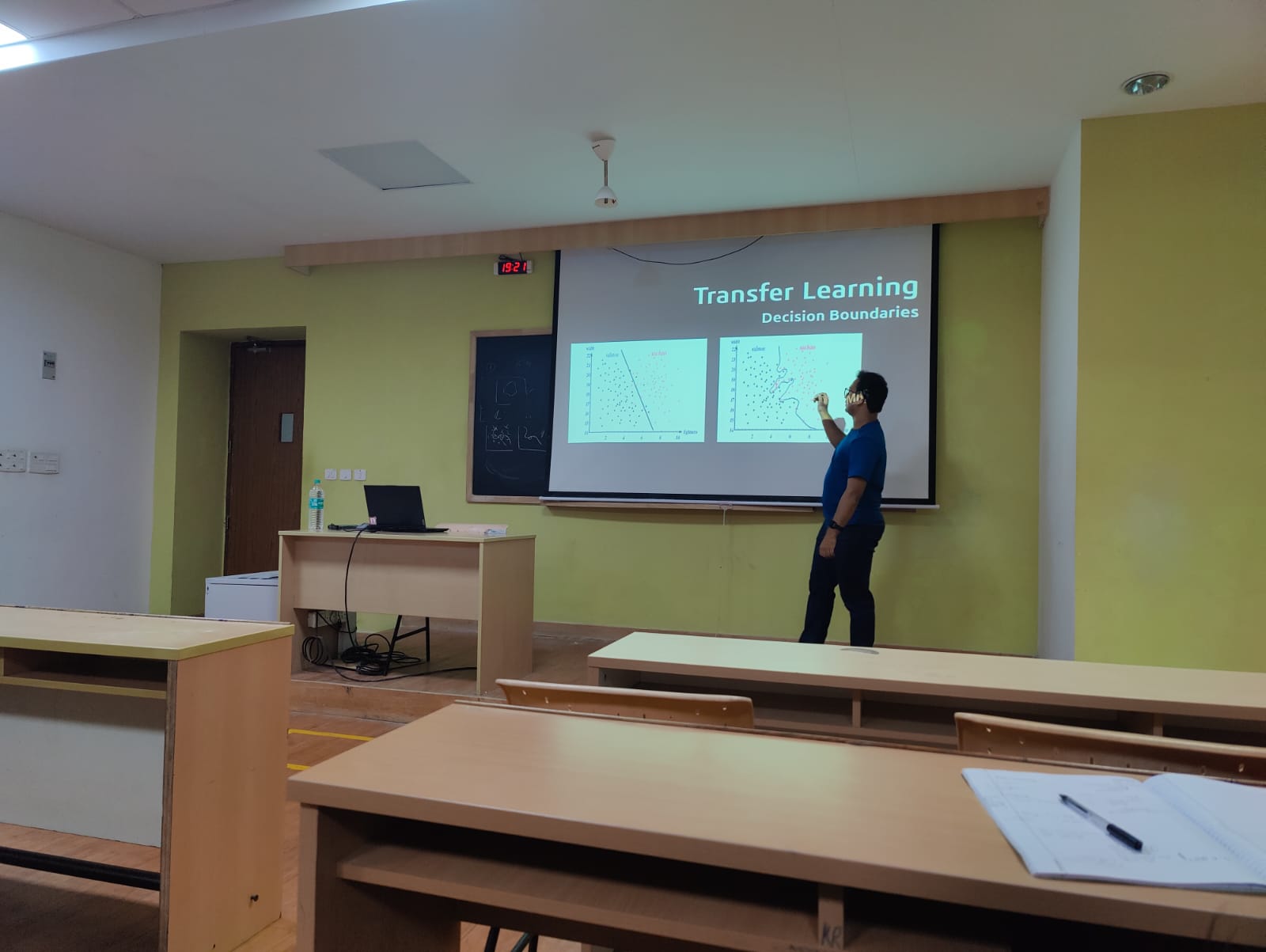
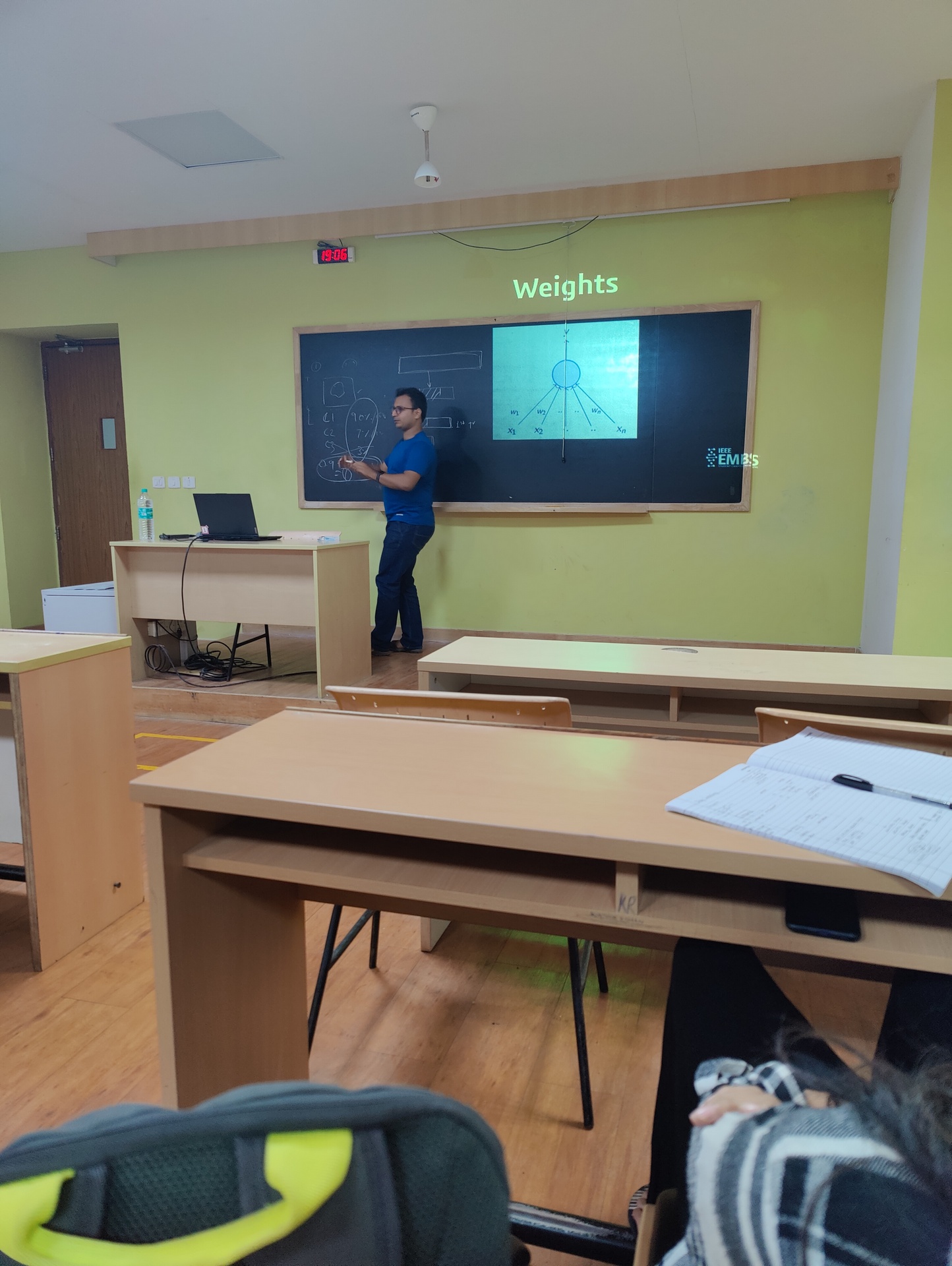
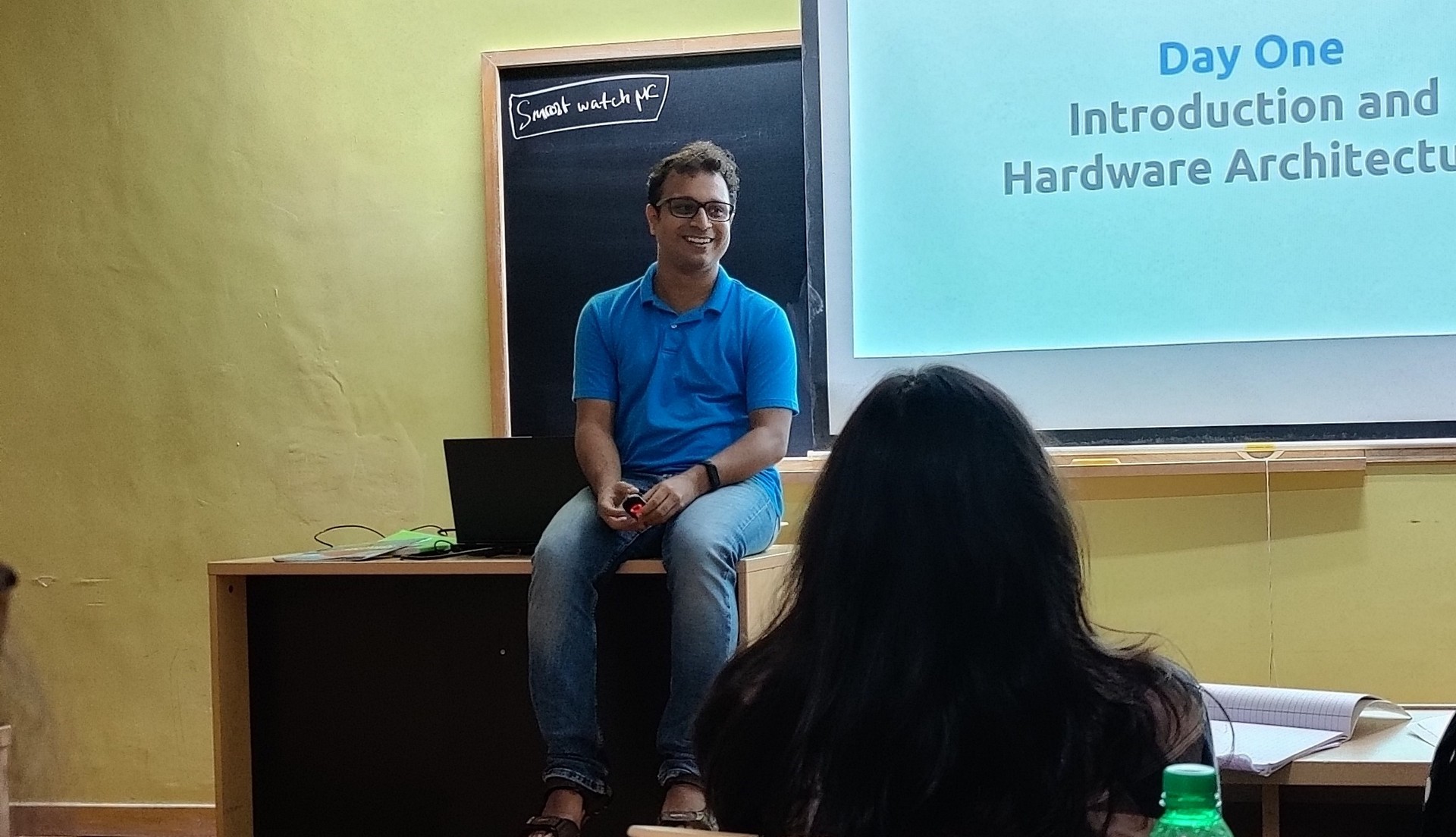
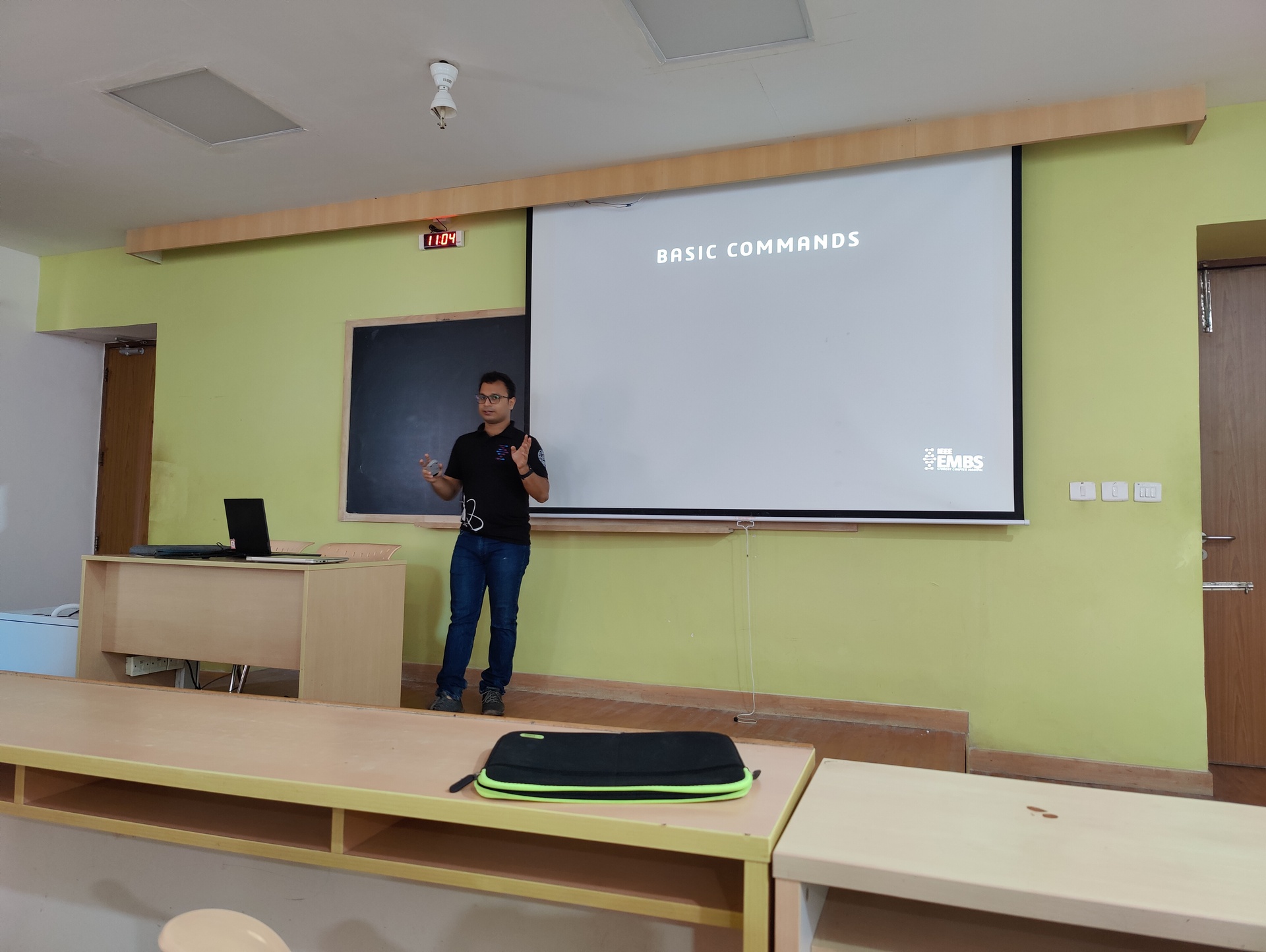
During my time as Head of Research, and later Chairperson, at the IEEE EMBS student chapter in Manipal, I helped organize and run workshops over my junior and senior years for newer students entering biomedical engineering and adjacent technical areas.
The workshops introduced students to signal processing, image processing, deep learning, microcontrollers, Linux, and programming fundamentals. I also helped run a longer mentoring track for junior members focused on electronics, programming basics, market analysis, and signal processing. Some of the strongest students from that group later joined research efforts with me and presented their work at a university symposium.
That was probably my first real experience with teaching as something more than just presenting slides. You learn pretty quickly that getting someone unstuck is a different skill from just knowing the material yourself.